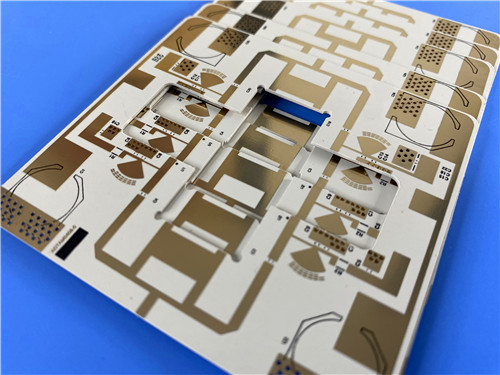
Σήμερα παρουσιάζω μια πραγματικά μοναδική προσαρμοσμένη πλακέτα τυπωμένου κυκλώματος (PCB) κατασκευασμένη από Wangling TP440— ένα θερμοπλαστικό χωρίς υαλοΐνες, γεμάτο κεραμικά, σχεδιασμένο ειδικά για απαιτητικές εφαρμογές αεροδιαστημικής και άμυνας.
Αυτή η προσαρμοσμένη πλακέτα PCB κατασκευάστηκε χρησιμοποιώντας Wangling TP440, ένα θερμοπλαστικό υψηλής συχνότητας με διηλεκτρική σταθερά 4,4. Η κατασκευή του χωρίς υαλοΐνες, η αντίσταση στην ακτινοβολία και η χαμηλή εκπομπή αερίων το καθιστούν ιδανικό για κεραίες GPS, συστήματα που φέρουν πυραύλους και πυροδοτικούς μηχανισμούς. Αξιοσημείωτα, ολόκληρο το κύκλωμα σχεδιάστηκε με μόλις 1 δίκτυο — μια μοναδική διαδρομή σήματος, που υποδηλώνει ένα εξαιρετικά εξειδικευμένο εξάρτημα RF.
Βασικά Σημεία
- Υλικό: Wangling TP440 — θερμοπλαστικό PPO γεμάτο κεραμικά (Dk 4,4)
- Βασικό Όφελος: Χωρίς ενίσχυση υαλοΐνων, ακριβής Dk, αντίσταση στην ακτινοβολία, χαμηλή εκπομπή αερίων
- Μέγεθος Πλακέτας: 45,63mm x 97,01mm | Πάχος: 1,6mm
- Κατασκευή: Διπλής όψης, καμία μάσκα συγκόλλησης δεν εφαρμόστηκε σε καμία πλευρά, μαύρη μεταξοτυπία χρησιμοποιήθηκε μόνο στην επάνω στρώση
- Σχεδιασμός: 24 εξαρτήματα, 28 vias, μόνο 1 δίκτυο — ένας εξαιρετικά εξειδικευμένος σχεδιασμός μονού κυκλώματος
- Ποιότητα: Επιτεύχθηκε IPC-Class-2 και πραγματοποιήθηκε 100% ηλεκτρικός έλεγχος
Η Πρόκληση: Αεροδιαστημική Αξιοπιστία Συναντά την Απόδοση RF
Απαιτήθηκε μια πλακέτα PCB υψηλής συχνότητας από τον πελάτη μας για μια κρίσιμη αεροδιαστημική εφαρμογή — πιθανότατα μια κεραία GPS, ένας πυροδοτικός μηχανισμός ή ένα σύστημα που φέρει πύραυλο. Οι απαιτήσεις ήταν αδιαπραγμάστες: αντίσταση στην ακτινοβολία, χαμηλή εκπομπή αερίων, σταθερή ηλεκτρική απόδοση από -100°C έως +150°C και συμπαγής μορφή.
Παραδοσιακά υλικά PTFE με ενίσχυση υαλοΐνων δεν μπορούσαν να παρέχουν την απαραίτητη διαστατική σταθερότητα ή αντίσταση στην ακτινοβολία. Τα κεραμικά υποστρώματα προσέφεραν την απόδοση, αλλά ήταν δύσκολο να μηχανηθούν και να επεξεργαστούν.
Η Λύση μας: Wangling TP440
Επιλέχθηκε το TP440, ένα μοναδικό υλικό από τη σειρά Wangling TP. Ορίστε γιατί επιλέχθηκε:
Κατασκευή Χωρίς Υαλοΐνες
Το διηλεκτρικό στρώμα αποτελούνταν αποκλειστικά από κεραμικά και ρητίνη PPO — δεν χρησιμοποιήθηκε ύφασμα από υαλοΐνες. Αυτό εξάλειψε το "φαινόμενο υαλοΐνων" (μικροσκοπικές διακυμάνσεις Dk που προκαλούνται από τα μοτίβα ύφανσης), εξασφαλίζοντας εξαιρετική συνέπεια σήματος.
Ακριβής Έλεγχος Dk (4,4)
Οι τιμές Dk από 3 έως 25 μπορούν να ρυθμιστούν στη σειρά TP προσαρμόζοντας την αναλογία κεραμικών προς ρητίνη. Επιλέχθηκε Dk 4,4 για να παρέχει μια βέλτιστη ισορροπία μεταξύ μικρογραφίας και ακεραιότητας σήματος.
Ανθεκτικό στην Ακτινοβολία & Χαμηλή Εκπομπή Αερίων
Αυτές οι ιδιότητες ήταν κρίσιμες για εφαρμογές στο διάστημα και την αεροδιαστημική. Το υλικό διατηρεί την απόδοσή του σε περιβάλλοντα υψηλής ακτινοβολίας με ελάχιστη εκπομπή αερίων, αποτρέποντας τη μόλυνση ευαίσθητων οπτικών ή ηλεκτρονικών.
Ευρύ Εύρος Θερμοκρασίας Λειτουργίας
Επιτεύχθηκε αξιόπιστη απόδοση από -100°C έως +150°C, καθιστώντας αυτό το υλικό κατάλληλο για τα πιο ακραία αεροδιαστημικά περιβάλλοντα.
Ανώτερη Μηχανική Κατεργασία
Σε αντίθεση με τα κεραμικά υποστρώματα (που απαιτούν εξειδικευμένη επεξεργασία), το TP440 μπορεί να μηχανηθεί χρησιμοποιώντας τυπικές τεχνικές PCB — εφαρμόστηκαν διάτρηση, φρεζάρισμα, κοπή και χάραξη. Η πρόσφυση του χαλκού βρέθηκε επίσης πιο αξιόπιστη από τα κεραμικά υποστρώματα με επίστρωση κενού.
Προδιαγραφές Πλακέτας
| Χαρακτηριστικό |
Προδιαγραφή |
| Διαστάσεις |
45,63mm x 97,01mm (±0,15mm) |
| Στοίβαξη |
35μm Cu / 1,5mm TP440 / 35μm Cu |
| Τελικό Πάχος |
1,6mm |
| Ίχνος/Χώρος |
5/8 mils |
| Ελάχιστο Μέγεθος Τρύπας |
0,3mm |
| Επιφανειακή Επεξεργασία |
Εμβάπτιση Χρυσού |
| Μάσκα Συγκόλλησης |
Καμία (και στις δύο πλευρές) |
| Μεταξοτυπία |
Μαύρη (μόνο στην επάνω πλευρά) |
| Έλεγχος |
100% ηλεκτρικός |
| Πρότυπο |
IPC-Class-2 |
Στατιστικά Σχεδιασμού
| Μετρική |
Τιμή |
| Εξαρτήματα |
24 |
| Συνολικά Pads |
19 (11 μέσω οπών, 8 SMT) |
| Vias |
28 |
| Δίκτυα |
1 |
Ο σχεδιασμός ενός δικτύου είναι το πιο αποκαλυπτικό στατιστικό — δημιουργήθηκε μια μοναδική αγώγιμη διαδρομή, όπως μια γραμμή μετάδοσης, μια τροφοδοσία κεραίας ή ένα απλό παθητικό δίκτυο. Αυτό επιβεβαιώνει ότι η εφαρμογή είναι ένα εξαιρετικά εξειδικευμένο εξάρτημα RF, πιθανότατα μια κεραία ή ένα δίκτυο τροφοδοσίας.
Καμία Μάσκα Συγκόλλησης (Και στις Δύο Πλευρές)
Η μάσκα συγκόλλησης εξαλείφθηκε για να αποτραπεί οποιαδήποτε πιθανή απώλεια διηλεκτρικού ή συμβολή στην εκπομπή αερίων — κρίσιμο για αεροδιαστημικές εφαρμογές όπου κάθε μεταβλητή πρέπει να ελέγχεται.
Μαύρη Μεταξοτυπία (Μόνο στην Επάνω Πλευρά)
Εφαρμόστηκε μαύρη μεταξοτυπία για να παρέχει εξαιρετική αντίθεση για την αναγνώριση των εξαρτημάτων, διατηρώντας παράλληλα μια επαγγελματική εμφάνιση.
Επιφανειακή Επεξεργασία Εμβάπτισης Χρυσού
Επιλέχθηκε η εμβάπτιση χρυσού για να προσφέρει μια επίπεδη, συγκολλήσιμη επιφάνεια με εξαιρετική αντοχή στη διάβρωση και δυνατότητα συγκόλλησης καλωδίων.
1,6mm Τελικό Πάχος
Το παχύτερο πλακέτο καθορίστηκε για να παρέχει μηχανική αντοχή για αεροδιαστημικές εφαρμογές όπου η αντίσταση σε κραδασμούς και κρούσεις είναι απαραίτητη.
Σύγκριση: Πώς Συγκρίνεται το TP440
| Ιδιότητα |
TP440 |
Τυπικό PTFE |
Κεραμικό Υπόστρωμα |
| Υαλοΐνες |
Όχι |
Συνήθως |
Όχι |
| Εύρος Dk |
3–25 (ρυθμιζόμενο) |
2,2–10 |
Διαφέρει |
| Αντίσταση στην Ακτινοβολία |
Εξαιρετική |
Μέτρια |
Εξαιρετική |
| Εκπομπή Αερίων |
Χαμηλή |
Χαμηλή |
Πολύ Χαμηλή |
| Μηχανική Κατεργασία |
Εξαιρετική |
Καλή |
Κακή |
| Μέγιστη Θερμοκρασία Λειτουργίας |
150°C |
150–260°C |
>300°C |
Γιατί Αυτό Έχει Σημασία: Το TP440 προσφέρει την αντίσταση στην ακτινοβολία και τη χαμηλή εκπομπή αερίων των κεραμικών υποστρωμάτων με την εξαιρετική μηχανική κατεργασία του PTFE — ένας σπάνιος συνδυασμός. Η κατασκευή του χωρίς υαλοΐνες εξασφαλίζει ανώτερη ομοιομορφία Dk.
Ιδανικές Εφαρμογές
- Κεραίες GPS που απαιτούν σταθερή απόδοση σε διαστημικά περιβάλλοντα
- Συστήματα που φέρουν πυραύλους, απαιτώντας αντοχή σε κραδασμούς και ακτινοβολία
- Πυροδοτικοί μηχανισμοί που απαιτούν συμπαγή, εξαιρετικά αξιόπιστα κυκλώματα RF
- Μικρογραφημένες κεραίες για αεροδιαστημικές και αμυντικές εφαρμογές
- Δορυφορικά συστήματα πλοήγησης Beidou
Ε: Τι κάνει το TP440 διαφορετικό από τα υλικά PTFE;
Α: Δεν χρησιμοποιείται ενίσχυση υαλοΐνων στο TP440 — το διηλεκτρικό αποτελείται εξ ολοκλήρου από κεραμικά και ρητίνη PPO. Οι διακυμάνσεις Dk που προκαλούνται από την ύφανση υαλοΐνων εξαλείφονται έτσι, παρέχοντας ανώτερη διαστατική σταθερότητα και αντίσταση στην ακτινοβολία.
Ε: Γιατί αυτός ο σχεδιασμός έχει μόνο 1 δίκτυο;
Α: Σχεδιάστηκε μια μοναδική αγώγιμη διαδρομή, όπως μια γραμμή τροφοδοσίας κεραίας ή ένα παθητικό δίκτυο RF. Αυτό είναι τυπικό για εξαιρετικά εξειδικευμένα εξαρτήματα RF όπως κεραίες και πυροδοτικούς μηχανισμούς.
Ε: Τι σημαίνει "ανθεκτικό στην ακτινοβολία" στην πράξη;
Α: Το υλικό διατηρεί τις ηλεκτρικές και μηχανικές του ιδιότητες όταν εκτίθεται σε ακτινοβολία (όπως στο διάστημα ή σε πυρηνικά περιβάλλοντα). Αυτό είναι κρίσιμο για αεροδιαστημικές και αμυντικές εφαρμογές.
Ε: Γιατί επιλέχθηκε το TP440 αντί για κεραμικό υπόστρωμα;
Α: Παρόμοιες ηλεκτρικές ιδιότητες και ιδιότητες αντίστασης στην ακτινοβολία προσφέρονται από το TP440, αλλά είναι πολύ ευκολότερο να μηχανηθεί χρησιμοποιώντας τυπικές μεθόδους κατασκευής PCB. Τα κεραμικά υποστρώματα απαιτούν εξειδικευμένη επεξεργασία όπως διάτρηση με λέιζερ και επίστρωση κενού.
Ε: Ποια είναι η σημασία των 28 vias με σχεδιασμό 1 δικτύου;
Α: Εκτεταμένες δομές γείωσης πιθανότατα δημιουργήθηκαν από την υψηλή ποσότητα vias, σχηματίζοντας ένα καλά καθορισμένο επίπεδο γείωσης ή θωράκιση για τη μοναδική διαδρομή σήματος.
Ε: Είναι αυτό το υλικό κατάλληλο για διαστημικές εφαρμογές;
Α: Ναι. Η χαμηλή εκπομπή αερίων και η αντίσταση στην ακτινοβολία καθιστούν το TP440 μια εξαιρετική επιλογή για διαστημικά και αεροδιαστημικά περιβάλλοντα.
Τελικές Σκέψεις
Ο μοναδικός συνδυασμός ιδιοτήτων του Wangling TP440 — κατασκευή χωρίς υαλοΐνες, ακριβής έλεγχος Dk, αντίσταση στην ακτινοβολία και εξαιρετική μηχανική κατεργασία — το καθιστά μια εξαιρετική επιλογή για απαιτητικές αεροδιαστημικές και αμυντικές εφαρμογές. Όταν η αποστολή σας απαιτεί αξιοπιστία στα πιο σκληρά περιβάλλοντα, αυτό το υλικό αποδίδει.
Έχετε στο μυαλό σας ένα αεροδιαστημικό ή κεραυνικό έργο; Θα ήθελα πολύ να το ακούσω.


 Το μήνυμά σας πρέπει να αποτελείται από 20-3.000 χαρακτήρες!