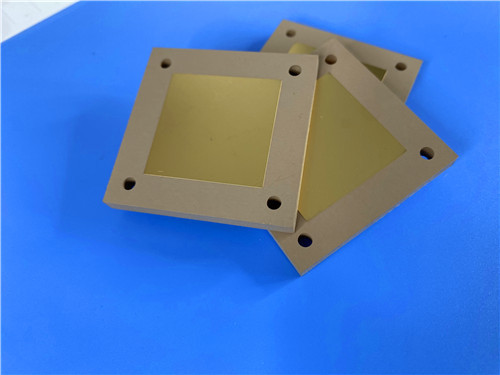
Στον κόσμο της μηχανικής RF και μικροκυμάτων, η επιλογή του υλικού υποστρώματος είναι συχνά η διαφορά μεταξύ ενός σχεδίου που λειτουργεί και ενός που υπερέχει. Αυτή η μελέτη περίπτωσης εξετάζει ένα προσαρμοσμένο PCB που αξιοποιεί το Rogers TMM6, ένα θερμοσκληρυνόμενο υλικό μικροκυμάτων, για να δημιουργήσει μια στιβαρή, υψηλής απόδοσης πλακέτα 2 επιπέδων. Η μινιμαλιστική προσέγγιση του σχεδιασμού - χωρίς μάσκα συγκόλλησης, χωρίς μεταξοτυπία και εξειδικευμένο φινίρισμα επιφάνειας EPIG - υπογραμμίζει τη μοναδική εστίαση στην ακεραιότητα του σήματος και τη μακροπρόθεσμη αξιοπιστία.
The Brief: A Ceramic-like Solution for Demanding RF Circuits
Αυτό το έργο επικεντρώθηκε στο σχεδιασμό και την κατασκευή μιας άκαμπτης πλακέτας τυπωμένου κυκλώματος 2 επιπέδων για κρίσιμες εφαρμογές ραδιοσυχνοτήτων και μικροκυμάτων. Η πλακέτα έχει διαστάσεις 85,6 mm x 99,75 mm και είναι κατασκευασμένη για να παρέχει σταθερή απόδοση υψηλής συχνότητας σε εφαρμογές που κυμαίνονται από δορυφορικές επικοινωνίες έως ενισχυτές ισχύος.
Αποκωδικοποίηση του λογαριασμού των υλικών: Το "γιατί" πίσω από το "τι"
Οι προδιαγραφές αποκαλύπτουν μια σχεδιαστική φιλοσοφία που έχει τις ρίζες της στην επιστήμη των υλικών, όπου κάθε επιλογή καθοδηγείται από την ανάγκη για προβλέψιμη, χαμηλής απώλειας και σταθερή ηλεκτρική απόδοση.
Το υπόστρωμα: Rogers TMM6 – Μια θερμοσκληρυνόμενη εναλλακτική λύση στο PTFE
Η πιο κρίσιμη απόφαση ήταν η επιλογή του Rogers TMM6 ως βασικό υλικό. Σε αντίθεση με τα παραδοσιακά ελάσματα μικροκυμάτων που βασίζονται σε PTFE, το TMM6 είναι ένα θερμοσκληρυνόμενο πολυμερές σύνθετο υλικό γεμάτο με κεραμικά. Αυτή η διάκριση είναι κρίσιμη και προσφέρει αρκετά σημαντικά πλεονεκτήματα.
Πρώτον, το TMM6 παρέχει την υψηλή διηλεκτρική σταθερά (Dk = 6,0 ± 0,08 στα 10 GHz) και τον χαμηλό συντελεστή διάχυσης (0,0023 στα 10 GHz) που απαιτούνται για συμπαγή σχέδια μικροκυμάτων. Ένα υψηλότερο Dk επιτρέπει μικρότερες γεωμετρίες κυκλωμάτων, κάτι που είναι απαραίτητο για τη σμίκρυνση σε δορυφορικές και αεροδιαστημικές εφαρμογές.
Δεύτερον, και ίσως πιο σημαντικό, η θερμοσκληρυνόμενη φύση του σημαίνει ότι δεν παρουσιάζει τα προβλήματα "ερπυσμού και ψυχρής ροής" που είναι κοινά στα υλικά PTFE. Αυτό το καθιστά μηχανικά σταθερό με το χρόνο και τη θερμοκρασία, διασφαλίζοντας ότι οι διαμπερείς οπές παραμένουν αξιόπιστες και ότι οι κρίσιμες διαστάσεις παραμένουν εντός των προδιαγραφών για τη διάρκεια ζωής του προϊόντος. Ο συντελεστής θερμικής διαστολής του (CTE) ταιριάζει επίσης με τον χαλκό, ενισχύοντας περαιτέρω την αξιοπιστία της επιμεταλλωμένης διαμπερούς οπής.
Μια φιλοσοφία σχεδιασμού της καθαρής ακεραιότητας σήματος
Τα πιο οπτικά χαρακτηριστικά της πλακέτας είναι η παντελής απουσία μάσκας συγκόλλησης και μεταξοτυπίας και στις δύο πλευρές. Αυτή είναι μια σκόπιμη και προηγμένη επιλογή σχεδιασμού για εφαρμογές υψηλής συχνότητας:
- Ελαχιστοποίηση της απώλειας:Η μάσκα συγκόλλησης έχει τις δικές της διηλεκτρικές ιδιότητες, οι οποίες μπορούν να εισάγουν απώλεια σήματος και διακυμάνσεις της σύνθετης αντίστασης στις συχνότητες μικροκυμάτων. Με την αφαίρεσή του, το σήμα αλληλεπιδρά μόνο με το υπόστρωμα TMM6 και τα χάλκινα ίχνη, παρέχοντας την πιο καθαρή δυνατή διαδρομή μετάδοσης.
- Αποφυγή μετατόπισης απόδοσης:Με την πάροδο του χρόνου, η μάσκα συγκόλλησης μπορεί να απορροφήσει την υγρασία και οι διηλεκτρικές της ιδιότητες μπορεί να μετατοπιστούν. Για εφαρμογές όπως οι δορυφορικές επικοινωνίες, όπου η μακροπρόθεσμη σταθερότητα είναι πρωταρχικής σημασίας, η εξάλειψη αυτής της μεταβλητής είναι ένα σημαντικό όφελος.
- Ανοχή υψηλής τάσης:Η απουσία διηλεκτρικής στρώσης μπορεί επίσης να είναι επωφελής σε σχέδια με δυναμικά υψηλής τάσης ή RF υψηλής ισχύος, όπου η βλάβη της μάσκας συγκόλλησης θα μπορούσε να είναι μια ανησυχία.
The Surface Finish: EPIG – Χωρίς Νικέλιο για Εξειδικευμένες Εφαρμογές
Η επιλογή του EPIG (Electroless Palladium Immersion Gold) είναι μια άλλη κρίσιμη λεπτομέρεια. Το EPIG είναι ένα φινίρισμα χωρίς νικέλιο που χρησιμοποιεί ένα στρώμα παλλαδίου κάτω από το χρυσό. Αυτή είναι μια ολοένα και πιο δημοφιλής επιλογή για ορισμένες εφαρμογές υψηλής συχνότητας και σύνδεσης καλωδίων, επειδή εξαλείφει το στρώμα νικελίου, το οποίο μπορεί να είναι ελαφρώς μαγνητικό και να προκαλέσει απώλειες ή να επηρεάσει την απόδοση ευαίσθητων κυκλωμάτων ραδιοσυχνοτήτων. Παρέχει επίσης μια πολύ επίπεδη επιφάνεια, η οποία είναι εξαιρετική για συγκόλληση και συγκόλληση χρυσού σύρματος.
Στατιστικά κατασκευών και απόδοσης
Οι λεπτομέρειες κατασκευής του PCB ενισχύουν τον προσανατολισμό υψηλής απόδοσης:
- Διαστάσεις πίνακα:85,6 mm x 99,75 mm με σφιχτή ανοχή +/- 0,15 mm, υποδεικνύοντας ακριβείς απαιτήσεις εφαρμογής.
- Στοίβαξη:Κατασκευή 2 στρωμάτων με 35 μm (1 oz) χαλκό και στις δύο πλευρές ενός πυρήνα TMM6 1,27 mm (50 mil).
- Ίχνος/Χώρος:Τουλάχιστον 4/6 mils, επιτρέποντας δρομολόγηση ελεγχόμενης αντίστασης.
- Πάχος επιμετάλλωσης:20 μm μέσω επιμετάλλωσης, εξασφαλίζοντας στιβαρές και αξιόπιστες διαμπερείς συνδέσεις.
- Δοκιμή:100% ηλεκτρική δοκιμή πριν από την αποστολή εγγυάται λειτουργική απόδοση.
Οι αποφάσεις σχεδιασμού: Μια πιο προσεκτική ματιά
Τα στατιστικά στοιχεία του πίνακα απεικονίζουν μια εικόνα ενός εξαιρετικά εξειδικευμένου, εστιασμένου υποκυκλώματος. Περιέχει23 εξαρτήματα,41 συνολικά τακάκια(με 25 διαμπερείς οπές και 16 μαξιλαράκια SMT),6 vias, και μόνο2 δίχτυα.
Αυτή η απλή δομή δικτύου—ένας σχεδιασμός με δύο μόνο δίχτυα—είναι σαφής ένδειξη του σκοπού του. Δεν είναι μια σύνθετη, πολυλειτουργική ψηφιακή πλακέτα. Αντίθετα, είναι σχεδόν σίγουρα ένα διακριτό εξάρτημα RF ή μικροκυμάτων, όπως:
- Ένα φίλτρο ή σύζευξη:Αυτές είναι εγγενώς συσκευές δύο θυρών (εισόδου/εξόδου) με επίπεδο γείωσης.
- Ένα στάδιο ενισχυτή ισχύος:Ένα τρανζίστορ ενισχυτή μπορεί να έχει μερικές συνδέσεις πόλωσης, αλλά η διαδρομή ραδιοσυχνοτήτων είναι βασικά μια σχεδίαση "2 διχτυών".
- Ένας μετασχηματιστής σύνθετης αντίστασης ή Balun:Αυτά τα δίκτυα που ταιριάζουν έχουν μια απλή τοπολογία σύνδεσης.
Η συμμόρφωσή του με την IPC-Class-2 επιβεβαιώνει ένα επίπεδο αξιοπιστίας κατάλληλο για «ηλεκτρονικά προϊόντα αποκλειστικής εξυπηρέτησης», μια κατηγορία που ταιριάζει απόλυτα στην αεροδιαστημική, την άμυνα και τις εμπορικές εφαρμογές υψηλής αξιοπιστίας για τις οποίες έχει σχεδιαστεί το TMM6.
Συμπέρασμα: Μια Λύση Σκοπός για Αξιοπιστία Υψηλής Συχνότητας
Αυτό το προσαρμοσμένο PCB είναι ένα συναρπαστικό παράδειγμα του πώς η επιλογή υλικού και ο μινιμαλιστικός σχεδιασμός συγκλίνουν για να δημιουργήσουν ένα ανώτερο προϊόν. Επιλέγοντας το Rogers TMM6, ο σχεδιαστής αξιοποίησε την ηλεκτρική απόδοση ενός υλικού γεμισμένου με κεραμικά, ενώ κέρδισε τα μηχανικά και μεταποιητικά πλεονεκτήματα μιας θερμοσκληρυνόμενης ρητίνης. Οι αποφάσεις να παραιτηθεί η μάσκα συγκόλλησης και η μεταξοτυπία, σε συνδυασμό με τη χρήση ενός φινιρίσματος επιφάνειας EPIG χωρίς νικέλιο, αποδεικνύουν μια βαθιά δέσμευση για τη διατήρηση της πιστότητας του σήματος και τη διασφάλιση μακροπρόθεσμης αξιοπιστίας.
Αυτό δεν είναι γενικός πίνακας. είναι μια ειδικά σχεδιασμένη λύση, που πιθανότατα προορίζεται για το κρίσιμο μπροστινό μέρος RF ενός δορυφόρου, ραντάρ ή συστήματος επικοινωνιών. Στέκεται ως απόδειξη του γεγονότος ότι στα ηλεκτρονικά υψηλής συχνότητας, λιγότερο πραγματικά μπορεί να είναι περισσότερο.


 Το μήνυμά σας πρέπει να αποτελείται από 20-3.000 χαρακτήρες!